Archive for the teaching Category

Thoughts on Freshman Comp.

Posted in teaching with tags , , , on April 16, 2010 by Mike

I teach Freshman Comp. to seniors here at the high school – they earn credit for college English and I earn a second paycheck (for each section!) from the college.  It works out well for all involved.

In this second semester, the focus is on writing about literature, and many of my students appear worried about having to take on Hamlet for their 1500-word research paper due in a couple weeks.  They’ve already signed up for their topics  – from a list of possible topics I gave them six weeks ago – and have written a paper responding to a piece of literary criticism concerning their topic.  We also spent about three weeks on the play itself.  Still, the worry is apparently there.

Here’s what I told them to assuage their fear:

1) This is Freshman Comp – I’m not expecting grad. level analysis from them in this paper. What I’m looking for is a clearly focused essay about a particular aspect of the play.  The thesis should be thoughtful and suggest the importance of their chosen topic to the play.

2) The whole purpose of Freshman Comp. is to prepare them for college-level writing, to get used to the demands and expectations that their future instructors will have.  Many of those expectations center on FOLLOWING INSTRUCTIONS.  No, you may not have to use MLA format in your upper-level chemistry classes, but you will be expected to follow some type of documentation format.  Knowing the rules of one will prepare you for others.

3) Research is READING.  Students can’t expect to spend 30 minutes on the databases and, voila, have all the sources necessary for the paper. Many of my students expect to find sources that say exactly what they want to say in their papers, but that ain’t gonna happen (and what would be the point of the paper if it did?).  The articles they find need to be read and information/ideas will have to be pulled to add to the discussion they are presenting in their papers.  It’s a time-consuming process.  Sorry if you were planning on knocking the paper out the weekend before it’s due – you’re setting yourself up for failure.

4) Your thoughts are important!  In fact, they’re the most important part of the essay.  Yes, this is a researched paper, but the research should add to your ideas, not be them.  Else, what’s the point?

5) A large part of Freshman Comp. is finding out what type of writer you are – how much time and effort needs to be invested on your part to come up with a final product that won’t be an embarrassment to you when your instructor reads it.  This is useful information to know before moving on to higher level classes.

6) Finally, that quality writing takes time. Yes, there are talented writers who can knock out engaging and clear 1000-word essays in just a couple hours, but these writers are the exception, and I often wonder what these students could produce if they did not rush through their work.  Still, most of my students dislike writing, and it shows in their essays because they approach it as a chore, and something to be done as quickly as possible in order to move on to more enjoyable pursuits.  And then they complain about their inevitable Cs and Ds.

I have  a quote on my door from Thoreau about reading, one that I pray my students read and take to heart:

To read well, that is, to read true books in a true spirit, is a noble exercise, and one that will task the reader more than any exercise which the customs of the day esteem. It requires a training such as the athletes underwent, the steady intention almost of the whole life to this object.

Substitute “writing” for “reading” and you have a pretty good idea about my philosophy of writing: it’s a skill.  Don’t use it, don’t practice it, don’t develop it  (as most students do not), and you can’t expect to be successful at it.
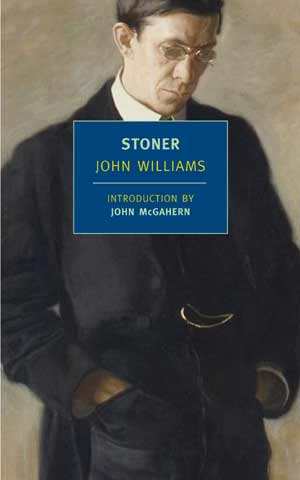
Stoner, by John Williams

Posted in Novels, teaching with tags , , , on March 31, 2010 by Mike

One chapter in, and I’m hooked.  William Stoner, a Missouri farm boy, is given the opportunity by his father to attend the University of Missouri to study agriculture.  Two years in he changes his major to literature, yet is uncertain about what he will do.  He doesn’t tell his parents.

Sloane,  an English professor there at the school, brings him to a realization a year away from graduation:

Sloane leaned forward until his face was close; Stoner saw the lines on the long thin face soften, and he heard the dry mocking voice become gentle and unprotected.

“But don’t you know, Mr. Stoner?” Sloane asked. “Don’t you understand about yourself yet? You’re going to be a teacher.”

Suddenly Sloane seemed very distant, and the walls of the office receded. Stoner felt himself suspended in the wide air, and he heard his voice ask, “Are you sure?”

“I’m sure,” Sloane said softly.

“How can you tell? How can you be sure?”

“It’s love, Mr. Stoner,” Sloane said cheerfully. “You are in love. It’s as simple as that.”

Maybe it is.

My usefulness pondered…

Posted in teaching with tags , , , on March 29, 2010 by Mike

…no, this is not a woe-is-me, I-don’t-mean-anything-to-anybody type of post.  I know I’m valuable – if only to reach the dishes on the top shelves of the cupboard for my wife.  At least it’s something.

Anyway, our illustrious department head brought news of certain changes being planned/considered for next year affecting the way we do things around here.  I won’t start complaining about having to write lesson plans, as I’m not using this post to bitch and moan about such matters.  I’ll leave that for another time when I actually have lesson plans to write.  But our dept. head started talking about time frames for grading papers and then started talking about requiring a certain number of grades per six weeks then started talking about prohibiting all food/drink from the classroom (including water) then talked about something else that I forget because I was fuming about the other things mentioned.

Anyway, a respected colleague and friend of mine (Foxy, as they call her these days), made a suggestion that we look into starting up a charter school and get out of public school and its rules while the getting’s good.  Tempting, but it seems like a lot of work to actually get it going.  And I didn’t get into teaching to actually work (heh – that’s a joke, people).

It was at that point I started wondering what it is I would (let’s not say “could” – that would be too damn depressing, I think) do if I weren’t a teacher.  I’ve known a few teachers to leave the profession and go into various sales positions: real estate, insurance, pot… but I know that kind of job would kill my soul; I hate talking on the phone, much less attempting to convince someone to buy something (sidenote: we’re reading Miller’s Death of a Salesman, and there must be some Biff in me somewhere: “…salesman, business of one kind or another… it’s a measly matter of existence…to suffer fifty weeks of the year for the sake of a two-week vacation”).  Outside of teaching I’ve only held part-time jobs, and being a sandwich artist for Subway wouldn’t be a very satisfying career path.  I fooled around with the idea of becoming a pastor at the end of my college career, but a winter in Minnesota wised me up in that regard. That and I don’t think God wants me talking about Mark Twain and Huck Finn every Sunday.  It’d be too damn expensive to go back to school, and anyway I’d end up getting a doctorate in English because that’s what I’m interested in.

Writing for a living is really the most attractive idea right now,  but I’ve got a wife and kids and a house and dreams of driving a Camaro in a year or two (they’re so pretty!).  And yet I’m feeling a real yearning to write, so much that I can’t stand to look at the stack of papers on my desk.

I’m starting to think it’s time to get serious about what I’ve always felt is a calling.  I’ve wasted a shit-ton of time already.

You would think…

Posted in teaching with tags , , , on March 7, 2010 by Mike

…that after being in my class for a semester my students would make DAMN sure to get the first sentence of their essays on the page without making any major stylistic or grammatical errors.

Of course, you’d think wrong.  What follows is a sampling of first sentences from the current batch of essays I’m grading…I don’t know whether to weep or gnash my teeth (laughing is right out).

“Charlotte Perkins Gilman, author of her most famous story, The Yellow Wallpaper.” [yep, that’s the opening ‘sentence’]

“Despite the fact that there are many characteristics we cannot discern about the narrator, the decision by the author to write in first person allows the reader to view the internal thoughts and emotions of the young sixth grade girl.” [which story?  which author?  It’s a mystery]

“It can be described that in the nature of life that each human enjoys his or her life on this physical world beyond its limit.” [huh?]

In the WAY too broad category: “The theme of any piece of literature is affected by many literary elements.”

more as I come across them…

“Happy Endings by Mary Atwood is not just any ordinary tragic tale of two lovers.” [short story title should be placed in quotation marks, plus the author’s name is Margaret]

“In the past two centuries the role of women in society has almostchanged completely.” [does no one look at little red squiggly lines anymore?]

“‘Personally, I disagree with their ideas’ (Gilman 572), traditionally not something you would have heard come out of a woman’s mouth in the late 1800’s.” [huh?]